“Painting the Portrait in a Landscape” with Anne Herrero
July 13 - 17
9:30 am to 4:00 pm each day
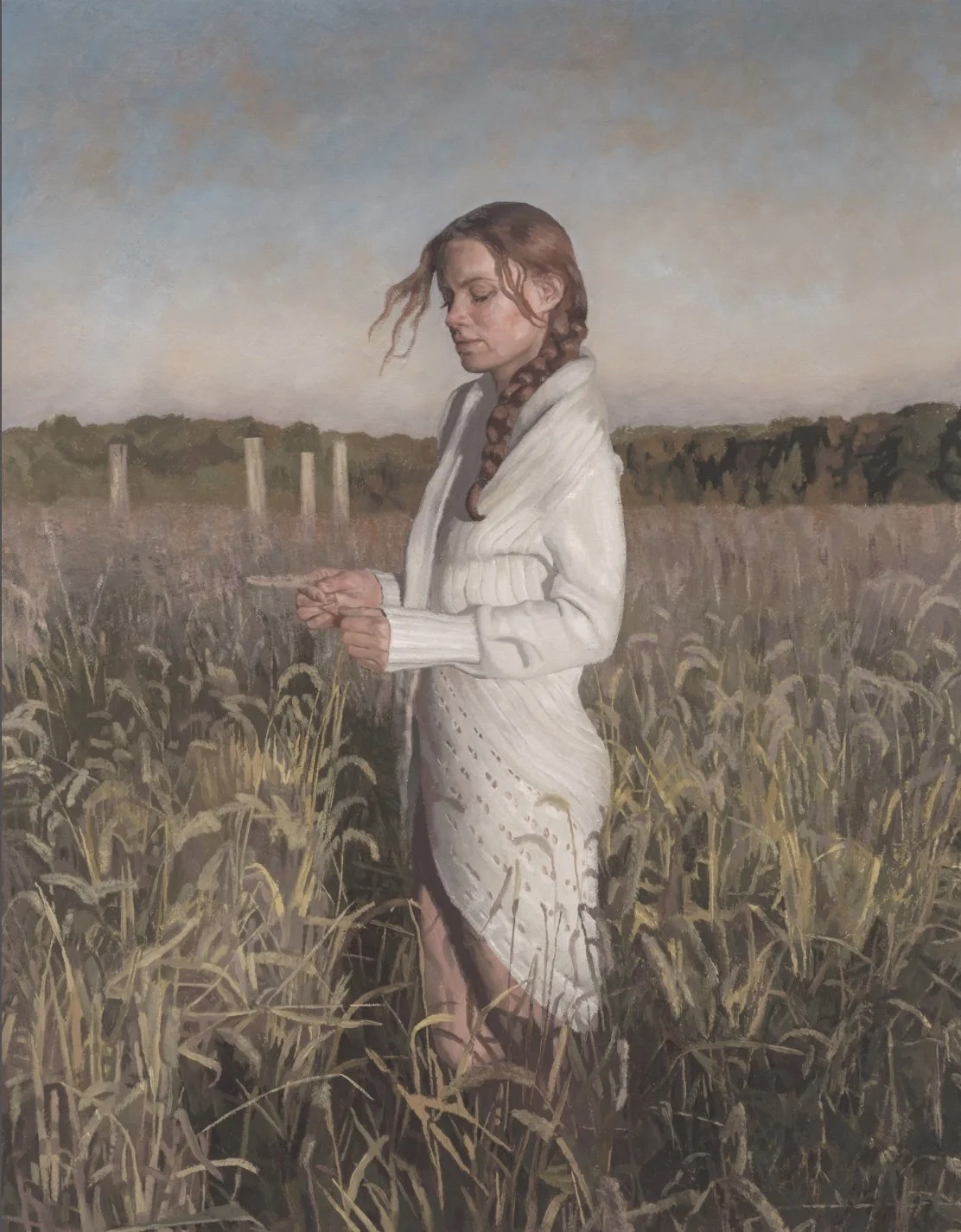
“The Outlaw” by Anne Herrero
This five day class will address the process of painting a portrait to develop a compelling image, spanning the fundamentals of drawing to character development and image strength. Participants will initially draw a linear block-in in graphite that establishes a one-to-one visual equivalence through a strong articulation of gesture, proportion, and perspective. After transferring their block-ins to linen, artists will paint the portrait form by form. In moving back and forth between optical and conceptual approaches, participants can choose to continue working with a close fidelity to nature or they can introduce more source material and push their portraits in narrative or emotive directions through the dramatization of light-effect and expression. Anne will offer guidance through demonstrations, critiques, and conversations about anatomy, Munsell color theory, the physics of light, paint handling, and visual hierarchies.
Beginner to advanced painters welcome; some previous experience oil painting recommended.
Core Learning Outcomes
1. Students will learn to capture the proportion, gesture, and perspective of a portrait in a linear block-in 2. Students will learn how to apply the basics of the Munsell color system to the window shading method
of painting
3. Students will learn to create a consistent and compelling light effect
4. Students will learn to identify and capture emotive and dramatic opportunities while painting the
portrait
Schedule:
Day 1: Block-In and Transfer
Introduction to Class. Discuss set-up and linear straight-line block in process. Decide on design and composition of image. Set-up your portrait considering light effect and ease of working. Begin block-in by finding abstract shapes, measurements, and tilts to establish proportion, gesture, and perspective. Work optically and mechanically. Discuss refinement of block-in. Introduce geometric solids and basic anatomy of the skull to complete block-in. Refine big shapes of early block-in to address the way shapes interlock and sit in space, to establish weight in curves, to build a convincing anatomical structure, and to get specificity. Continue to work optically, but introduce conceptual modes of anatomy and structure as well. Transfer drawing to canvas if done with block-inTone canvas to a neutral color of raw umber in preparation for painting if you have not done so already.
Day 2: Color Theory, Forehead, and Hair
Introduce Munsell color theory language: hue, value, chroma. Introduce physics of light. Discuss palette and palette set-up. Finish block-in if you have not already. Paint a conceptual sphere the color of the model’s flesh. Using your sphere as reference, paint forehead and hair.
Day 3: Nose and Muzzle
Continue painting the forehead and hair. Discuss the strategy of choosing five paintings or less to consult while working and move your painting in these directions by making similar color, light, and handling decisions. Paint nose and muzzle. At the end of class, introduce background color or colors using brushy marks. In small portraits, I usually like to have background forms of trees, clouds, or fields. Simple choices of a sunset or night sky are also options. Since time is limited, think about where you would like to focus and what that means for your paint handling and the background.
Day 4: Sides of Face, Ears, and Neck
Continue or finish painting nose and muzzle. Begin to paint sides of face, ears, and neck. As you work your way down the neck and into the shoulders and ribcage, experiment with looser handling. Begin finding forms in the brush marks of your background that support your portrait
Day 5: Form Modeling and Background
Continue painting sides of face, ears, and neck. Bring some detail and description into the background forms or introduce a glaze to strengthen light effect.
Registration is $750.
Payment can be sent via check to our studio at:
GACA, 4814 Washington Blvd, Suite 230, St. Louis, MO. 63108
or you can use Zelle with our email: gacastudio.info@gmail.com
Workshops take place in the GACA’s studio, located in the Pierce Arrow Building,
4814 Washington Blvd, Suite 230, St. Louis, MO. 63108
REGISTRATION for this workshop
For more information on Anne Herrero, please visit her website at:
https://anneherrero.com/home.html
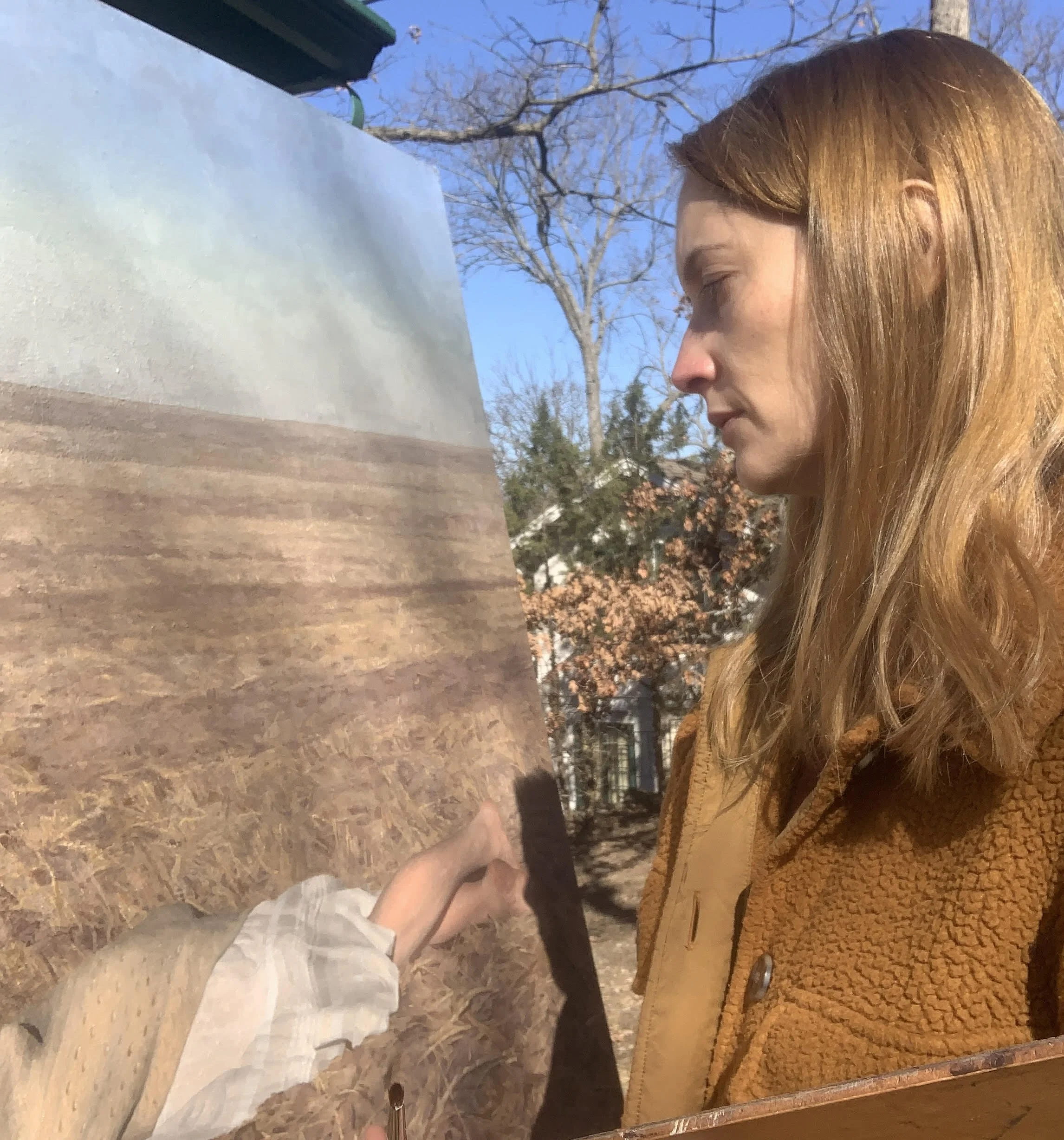
Anne Herrero painting, “Harvest Ripe”
Registration is $750.
PAY by CREDIT CARD
PAY by CHECK: mail to our studio at:
GACA, 4814 Washington Blvd, Suite 230, St. Louis, MO. 63108
PAY BY ZELLE: with our email: gacastudio.info@gmail.com
Workshops take place in the GACA’s studio, located in the Pierce Arrow Building,
4814 Washington Blvd, Suite 230, St. Louis, MO. 63108
MATERIALS LIST
Drawing Supplies:
-Drawing board
-Strathmore 400 series 11” x 14” drawing pad
-HB pencils from Staedtler or TomBow
-Gray kneaded eraser
-Tombow Mono Zero eraser
-Standard X-acto blades and knife
-sandpaper block for sharpening pencils
-blue ballpoint pen
-thin knitting needle or skewer
-washer and thread to make a plumb bob
-handheld mirror
-concave and convex lenses
-vine charcoal
-sepia Micron pen for transfer
Painting Supplies:
-Paints:
Lead White ground in linseed oil, Yellow Ochre, Raw Sienna, Burnt Sienna, Red Umber,
Cadmium Red or Genuine Vermilion, Alizarin Crimson, Raw Umber, Terre Verte, Gamblin Van Dyke Brown
Brushes:
-#1-12 Rounds Sable or Synthetic. I usually use both #10 and #12 Blick Sables, primarily 12. I would recommend getting three or four sables and one or two bristles. Rosemary is also a good option.
-#2-6 Bristle filbert (these can be from Rosemary or Princeton)
-bring brushes that you like and are familiar to your hand
-palette knife
-Wood Palette - make sure it is prepared or sealed. I have had the New Wave Highland palette, natural stain for years. I prefer the rectangular format so that I can mix numerous strings of color and keep them organized. I also prefer the natural or brown stain because I work on warmer grounds.
-Oleogel from Rublev Natural pigments
-Small container to hold linseed oil
-Small bottle of linseed oil
-Small bottle of vegetable oil.
-glass jar with lid for vegetable oil
-the masters brush cleaner (or soap or whatever you regularly use)
-Viva paper towels-gamsol (we will only use this to tone our canvases)
-Panel or linen canvas, size 11” x 14” toned to a light brown with a raw umber imprimatura (you can use gamsol to thin the paint). I often work on this size because it offers enough room to develop a landscape while keeping the central focus on the portrait. I prefer Claessens 13 or Claessens 12. Centurion is also an affordable option. Please ensure you have an oil ground as your surface.